
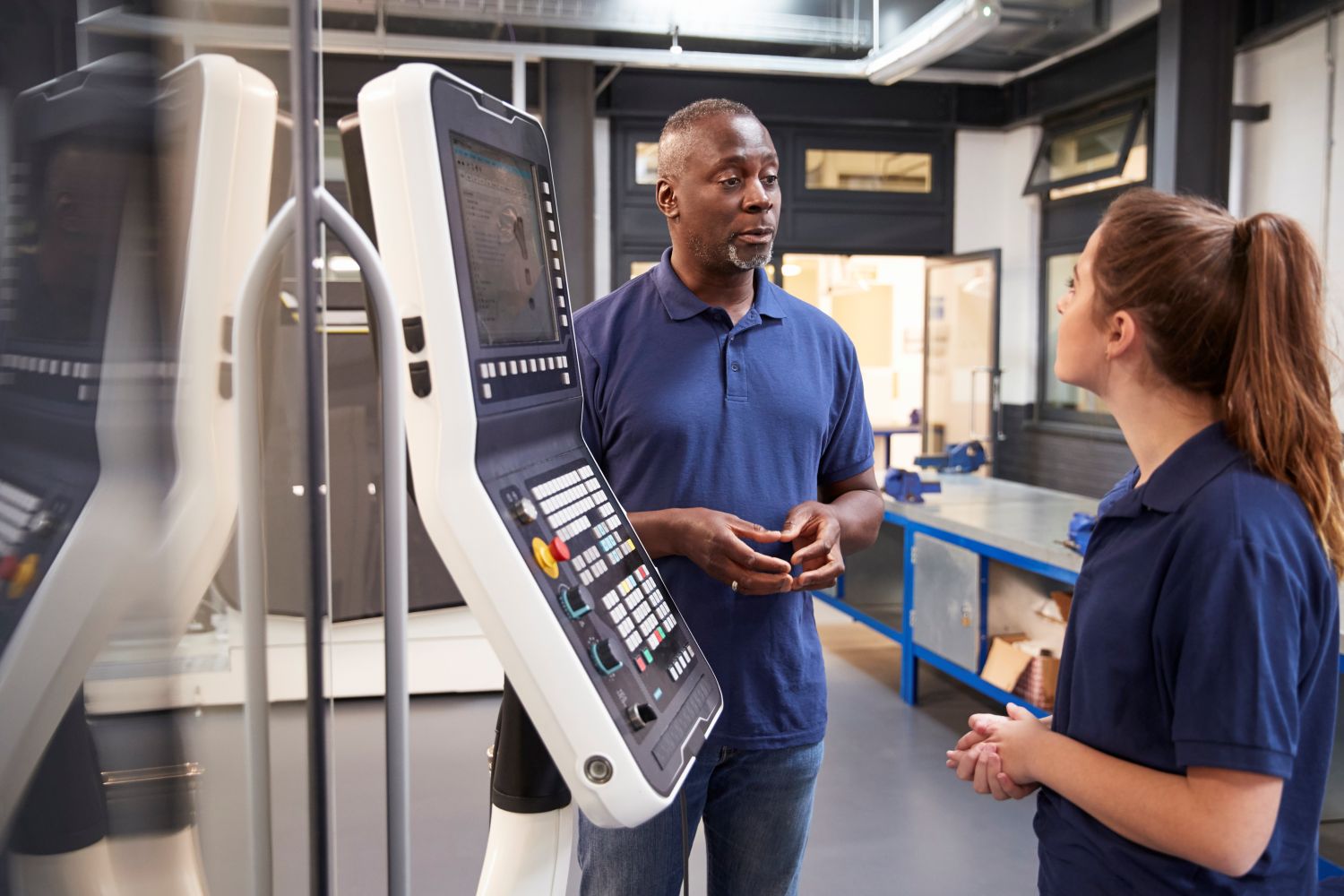
CNC machining has transformed the manufacturing landscape, offering a level of precision and efficiency that traditional methods often cannot achieve. This discussion examines the evolution of CNC technology, its numerous advantages, and the critical role of computer control in enhancing production capabilities. By gaining an understanding of the various types of CNC machines and their applications, one can appreciate how these machines address complex workpieces, revealing both the challenges they overcome and the innovative solutions they facilitate. Furthermore, this guide provides practical insights for maximising the potential of CNC machining, making it an essential resource for individuals seeking to master complex designs in their projects.
Understanding CNC Machining and its Benefits
CNC machining, or computer numerical control machining, signifies a substantial advancement in manufacturing processes, fundamentally transforming the design, production, and optimisation of complex components.
The evolution of CNC technology has facilitated precision engineering and automation, enabling the intricate fabrication of various workpieces while significantly enhancing productivity and workflow efficiency.
Through the integration of advanced technologies, CNC machining has redefined traditional manufacturing practices, paving the way for innovations in design software, toolpath optimisation, and overall operational efficiency across a wide range of industrial applications.
Definition and History of CNC Machining
CNC, or computer numerical control machining, is defined as a method of automating the control of machining tools through computer systems. This technology facilitates precise control over cutting tools, milling, and various other manufacturing processes.
The origins of CNC machining can be traced back to the late 1940s and early 1950s, during which the first numerical control systems were developed to enhance engineering design and production efficiency.
Initially, these systems employed punched tape to direct machine movements, a method that proved to be labour-intensive and time-consuming. However, with advancements in technology, the introduction of computers revolutionised CNC machining by enabling the integration of complex algorithms and sophisticated software. This transition not only improved accuracy and consistency but also facilitated the execution of intricate designs that were previously unattainable.
The development of CAD/CAM systems further streamlined the design-to-manufacturing process, allowing engineers to create detailed schematics that could be seamlessly translated into actual production.
The evolution of CNC technology continued with the incorporation of advanced sensors and Internet of Things (IoT) capabilities, ushering in a new era of automation that enhances productivity while simultaneously reducing operational costs.
Advantages of Using CNC Machines
The advantages of utilising CNC machines in manufacturing are extensive, fundamentally transforming productivity and operational efficiency across various industries. CNC technology significantly enhances precision engineering by facilitating consistent machining accuracy, minimising human error, and enabling the execution of complex designs that adhere to stringent tolerance requirements.
This increase in production speed markedly boosts output, allowing companies to meet tight deadlines with greater efficacy. Workflow efficiency is substantially improved, as CNC systems automate repetitive tasks that would otherwise consume valuable time and labour resources.
The capability to manage intricate designs and specifications not only enhances quality assurance processes but also provides companies with the flexibility to customise machining solutions tailored to client needs.
Ultimately, this results in improved economic efficiency in CNC operations. The reduction in material waste and optimised machine utilisation leads to lower costs and increased profitability.
The Role of Computer Control in CNC Machining
Computer control is fundamental to CNC machining, as it enables precise programming and automation of machining processes, thereby significantly enhancing overall efficiency and output quality.
Through the use of advanced software integration, CNC systems can produce optimised toolpaths that minimise material removal waste while ensuring dimensional accuracy and a superior surface finish. This capability is essential for meeting the intricate demands of contemporary manufacturing.
How Computer Control Enhances Precision and Efficiency
Computer control significantly enhances precision and efficiency in CNC machining through advanced algorithms that enable meticulous CNC programming. This ensures that each machining operation adheres strictly to specified requirements and tolerances.
Such technological advancements minimise the potential for human error, resulting in improved machining accuracy and consistent quality across multiple production runs.
By incorporating real-time adjustments, operators are able to respond swiftly to variations in machining conditions, thereby maintaining optimal performance metrics throughout the process.
Furthermore, predictive analytics offer a proactive strategy by analysing historical data to anticipate potential issues before they occur, thus enhancing overall operational reliability.
The implementation of feedback loops facilitates continuous monitoring and refinement of performance, allowing for adjustments that align with the desired output.
In summary, these sophisticated computer control technologies give the power to manufacturers to effectively address operational challenges and significantly enhance the throughput and durability of their machining operations.
Types of CNC Machines and their Applications
CNC machines encompass a variety of types, each specifically designed for particular applications within the manufacturing sector. This includes CNC milling machines, turning centres, and advanced robotics employed for automation in machining.
These diverse CNC machines are engineered to accommodate a range of materials and machining techniques, thereby enabling manufacturers to satisfy various engineering design requirements and production needs.
CNC milling machines, for instance, are particularly adept at precision cutting and shaping, rendering them suitable for the production of intricate components used in the aerospace and automotive industries. Conversely, turning centres are designed to rotate workpieces, facilitating the creation of cylindrical components with exceptional accuracy.
Recent advancements in CNC technology have introduced multi-axis machines capable of executing complex designs with remarkable efficiency, thereby expanding the possibilities for custom tooling and fabrication. As industries continue to progress, the integration of CNC machines remains crucial, allowing for the production of highly detailed and innovative designs while optimising operations and reducing lead times.
Mastering Complexity with CNC Machining
CNC machining is highly proficient in addressing complex manufacturing challenges, providing effective solutions for the production of intricate workpieces that may be difficult to achieve with traditional machining methods.
The sophisticated technology underlying CNC machining give the power tos manufacturers to manage design complexities and attain exceptional levels of precision, which are critical for sectors such as aerospace, automotive, and medical devices.
Challenges of Complex Workpieces and How CNC Machining Helps
The challenges associated with complex workpieces typically encompass intricate design requirements, precise tolerances, and the necessity for advanced machining techniques that can adeptly manage material properties.
CNC machining provides effective solutions to these operational challenges by employing sophisticated tooling and automation processes, which ensure high-quality outcomes while maintaining operational efficiency.
By utilising computer numerical control technology, manufacturers can accurately produce complex shapes that traditional methods may find difficult to achieve. This advanced methodology not only enhances efficiency but also improves repeatability and consistency across production runs.
The integration of innovative software facilitates seamless adjustments to design specifications, ensuring that each component adheres to exacting standards. CNC systems allow for the use of specialised, high-speed tooling that enables precise material removal while minimising waste.
This focus on custom machining solutions highlights the critical role of quality assurance in manufacturing, as companies strive to attain perfection in every part produced.
Examples of Complex Workpieces Created with CNC Machining
Numerous examples illustrate the capabilities of CNC machining in creating complex workpieces, effectively demonstrating the technology’s proficiency in managing intricate designs across various industries.
From aerospace components such as turbine blades to automotive parts with advanced geometries, CNC machining has proven to be essential in the production of high-precision, high-quality components.
In the medical field, for example, custom tooling produced through CNC machining has facilitated the development of intricate surgical instruments that require exceptional accuracy. A notable instance is the creation of bespoke orthopaedic implants, which are meticulously tailored to fit the unique anatomies of individual patients.
Additionally, a manufacturer specialising in motorsport components has successfully employed CNC machining to fabricate lightweight yet durable engine components. This underscores how advanced technology can enhance performance while pushing the boundaries of engineering design.
Such real-world applications clearly demonstrate the versatility and precision that CNC machining contributes to complex manufacturing challenges, establishing it as a vital asset in modern production environments.
Tips for Achieving Intricate Workpieces with CNC Machining
Achieving intricate workpieces through CNC machining necessitates meticulous planning and precise execution. It is imperative for manufacturers to implement effective design considerations and machining techniques.
By comprehensively understanding the complexities associated with CNC operations, manufacturers can enhance their production capabilities while maintaining high standards of quality and efficiency.
Design Considerations and Programming Techniques
Design considerations and programming techniques are essential when striving to produce complex workpieces through CNC machining, as they significantly affect overall machining efficiency and output quality. The use of CAD/CAM systems facilitates effective toolpath optimisation, ensuring that the machining process meets the precise specifications required for intricate designs.
To enhance project success, it is crucial to integrate design and programming aspects, as this collaboration fosters innovation and precision in manufacturing automation. Common practices, such as simulation, enable engineers to visualise machining processes prior to actual production, reducing the risks of errors and inefficiencies.
Moreover, implementing robust tooling strategies is instrumental in minimising cycle times while ensuring the durability of machined components. The selection of appropriate software is also critical, as it can substantially influence project outcomes by affecting adaptability to evolving technical specifications or client demands, ultimately resulting in higher-quality machined parts and improved operational efficiency.
Importance of Quality Control and Maintenance
Quality control and maintenance strategies are essential to the success of CNC machining processes, ensuring that the complexities of workpieces are produced to stringent standards and that operational efficiency is sustained over time. By implementing rigorous quality assurance practices, manufacturers can significantly reduce defects in machining accuracy and enhance overall productivity.
To achieve these objectives, various quality control measures, including regular inspections, statistical process control, and adherence to industry standards, can be systematically incorporated into production workflows. Additionally, maintaining machinery through routine servicing not only helps prevent breakdowns but also improves performance metrics such as precision and cycle times.
These practices ultimately contribute to the economic efficiency of CNC operations, enabling companies to meet customer demands while minimising waste and reducing operational costs. In today’s competitive landscape, prioritising these strategies can lead to sustained profitability and a robust market position.
Tags: CNC